


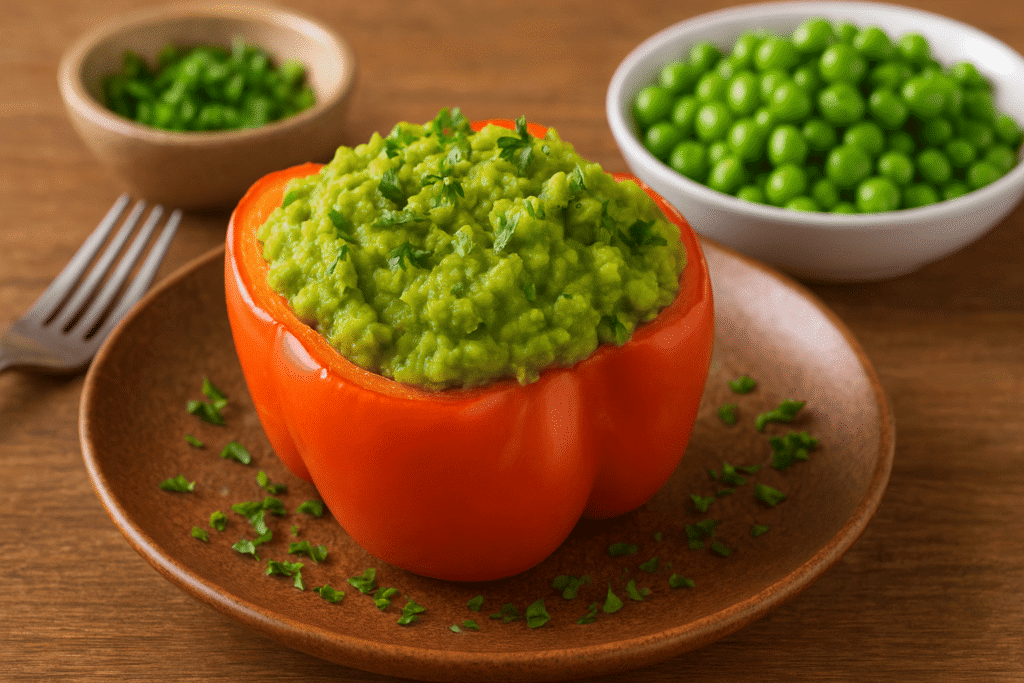
Stuffed pea dishes are one of the most flavorful, nutrient-rich, and versatile vegan meals you can prepare at home. Whether you enjoy Indian masala flavors, Mediterranean herbs, or modern fusion twists, peas can adapt beautifully to every cuisine. Known for their subtle sweetness and impressive nutritional value, peas make an excellent stuffing ingredient.
A stuffed pea dish is more than just a vegan recipe—it’s a celebration of health, taste, and creativity. In this blog, we will explore what makes stuffed pea dishes so special, how to prepare them, and why they should become a part of your weekly diet.
Nutritional Value Peas
Peas are a powerhouse of nutrients, making them a top choice for stuffing. A single cup of green peas contains around 118 calories, 8 grams of protein, 7 grams of fiber, and 25% of your daily Vitamin C needs. They are also an excellent source of Vitamin A, Vitamin K, and folate, which support eye health, bone strength, and blood circulation.
Additionally, peas contain a unique mix of antioxidants such as flavonoids and carotenoids that help fight inflammation. For vegans who often need plant-based protein sources, peas provide an affordable and accessible option.
Why Stuffed Pea
You may wonder, why stuffed pea and not another vegetable? The answer lies in texture and nutrition. Peas are soft, slightly starchy, and naturally sweet, which means they blend perfectly with spices, herbs, and grains. When used as stuffing, they create a creamy filling without requiring any dairy.
Moreover, peas support stable blood sugar levels, reduce cravings, and improve digestion thanks to their fiber content. Therefore, stuffed pea dishes are not only satisfying but also help you stay energized throughout the day.
Vegan Healthy Choice
Choosing a stuffed pea dish aligns perfectly with a vegan lifestyle. Unlike cheese or meat-based stuffing, peas are cholesterol-free and low in saturated fat. They are naturally gluten-free, making them suitable for individuals with gluten sensitivities.
Another reason peas stand out is their environmental sustainability. Compared to animal-based protein sources, peas require less water and fewer resources to grow. This means every stuffed pea dish you prepare contributes to a healthier planet while nourishing your body.

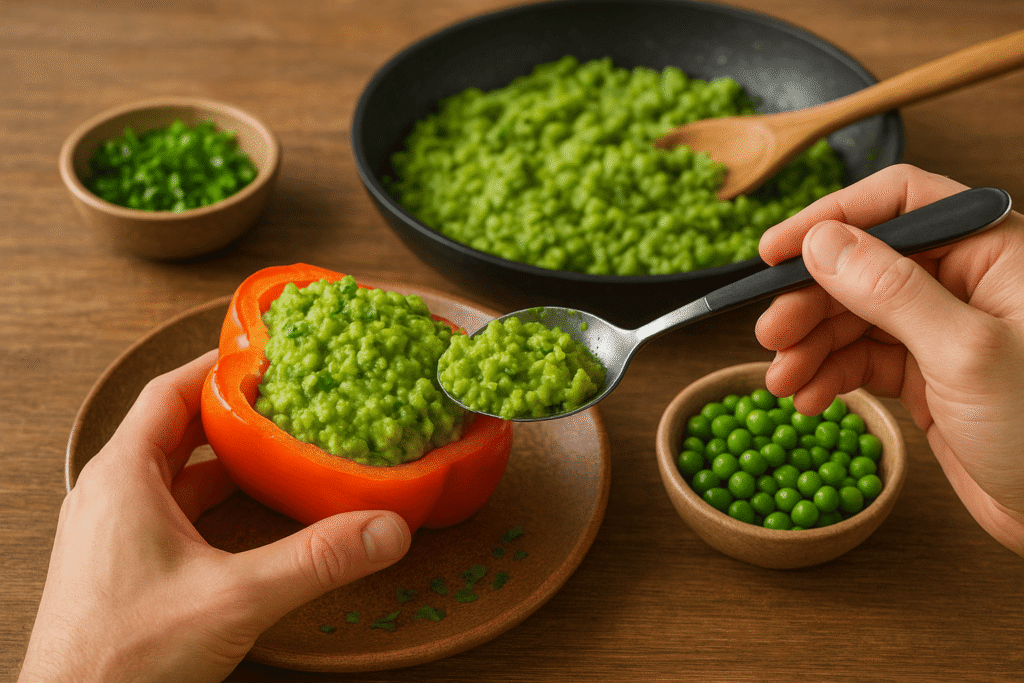
Recipe Stuffed Pea
Here’s a simple yet flavorful vegan stuffed pea recipe you can try:
Ingredients:
- 1 cup green peas (fresh or frozen)
- 2 cloves garlic, minced
- 1-inch ginger, grated
- 1 teaspoon cumin seeds
- ½ teaspoon turmeric powder
- ½ teaspoon chili flakes
- 2 tablespoons olive oil
- Salt to taste
- Fresh coriander for garnish
- Vegetables for stuffing (bell peppers, mushrooms, or zucchini)
Instructions:
- Boil peas for 5–7 minutes until tender.
- Drain and mash them with garlic, ginger, and spices.
- Heat olive oil in a pan, sauté cumin seeds, then add the pea mixture. Cook for 3–4 minutes.
- Cut vegetables of choice (like bell peppers) in half and remove seeds.
- Stuff them with the pea mixture.
- Bake at 180°C (350°F) for 20 minutes or steam for a lighter version.
- Garnish with fresh coriander and serve hot.
This recipe balances health and flavor while preserving the natural sweetness of peas.
Benefits of Stuffed Pea
The benefits of eating this dishes go beyond nutrition. Let’s look at some key advantages:
- High Satiety – Fiber-rich peas keep you full for longer, reducing overeating.
- Heart-Friendly – Low in cholesterol and fat, peas support heart health.
- Protein Boost – Essential for vegans, peas provide 8 grams of protein per cup.
- Weight Management – Low-calorie and filling, stuffed pea dishes aid in weight control.
- Versatile Use – You can stuff peas into breads, dumplings, or vegetables.
Variations Stuffed Pea
The beauty of a stuffed pea dish lies in its versatility. You can enjoy it in multiple styles depending on your mood and cuisine preference:
- Indian Style – Mix peas with garam masala, turmeric, and coriander; stuff into parathas or samosas.
- Mediterranean Style – Combine peas with olive oil, garlic, and parsley; stuff into zucchini boats.
- Asian Fusion – Blend peas with soy sauce, ginger, and sesame oil; stuff into dumplings.
- Modern Twist – Use mashed peas with avocado and lemon; stuff into wraps or tacos.
These variations ensure that you never get bored of eating peas while maintaining a healthy vegan lifestyle.
Calorie Count Stuffed Pea
A typical serving of this dish contains around 180–220 calories, depending on preparation style. Here’s a breakdown for one serving:
- Peas (1 cup): 118 calories
- Olive oil (1 tbsp): 120 calories
- Spices and herbs: ~10 calories
- Vegetable shell (like bell pepper): 30–40 calories
👉 Total per serving: ~200–250 calories
This makes it an excellent meal for weight-conscious individuals who want a nutritious, satisfying, and low-calorie dish.
Stuffed Pea Tips
For the best stuffed pea dishes, keep these cooking tips in mind:
- Always use fresh peas for better flavor, but frozen peas also work well.
- Add lemon juice at the end for brightness and enhanced taste.
- Avoid overcooking peas, as they may lose their color and nutrients.
- Choose colorful vegetables like bell peppers or zucchini for stuffing to boost presentation.
- Pair stuffed pea dishes with whole-grain sides like quinoa, brown rice, or millet for a complete meal.
Expert Advice Peas
Nutritionists recommend incorporating peas into your diet at least twice a week. Since they are rich in protein, they can replace lentils or beans in certain meals. If you are vegan or vegetarian, pairing peas with whole grains creates a complete protein profile, giving your body all essential amino acids.
Conclusion on Stuffed Pea
In conclusion, a stuffed pea dish is one of the healthiest and tastiest vegan meals you can prepare at home. It is rich in protein, fiber, and antioxidants while being low in calories. The versatility of peas allows you to enjoy them in Indian, Mediterranean, or global fusion recipes without compromising taste.
By adding stuffed pea dishes to your weekly menu, you not only nourish your body but also support sustainable eating habits. So, the next time you are looking for a quick, healthy, and satisfying vegan meal, stuffed peas should be your go-to choice.
FAQs on Stuffed Pea
Q1. Are stuffed pea dishes suitable for weight loss?
Yes, they are low in calories and high in fiber, which keeps you full longer.
Q2. Can I use frozen peas instead of fresh?
Absolutely. Frozen peas retain most of their nutrients and are convenient for quick cooking.
Q3. What vegetables can I use for stuffing?
Bell peppers, zucchini, mushrooms, and eggplants work best as stuffing shells.
Q4. How can I make stuffed peas spicier?
Add chili powder, paprika, or hot sauce for extra heat.
Q5. Are stuffed pea dishes gluten-free?
Yes, peas and vegetables are naturally gluten-free. Just ensure other ingredients (like soy sauce) are gluten-free too.
Leave a Reply Cancel reply