 ucalorie
 If you’re craving a rustic, earthy flatbread that brings the taste of Punjab straight to your table, this Makka ki Roti will steal your heart. Packed with the robust flavor of cornmeal and complemented by the subtle aroma of carom seeds, this traditional Indian flatbread offers a hearty and satisfying bite. Often paired with Sarson ka Saag (mustard greens curry), Makka ki Roti is the quintessential winter delight — comforting, warming, and incredibly nourishing.
Unlike modern breads that often rely on yeast or refined flours, this Makka ki Roti focuses on simplicity and natural ingredients. The coarse texture of maize flour, combined with just a touch of spice, creates a flatbread that feels both wholesome and indulgent. Every bite connects you to the rustic kitchens of rural Punjab, where food is slow-cooked and deeply loved.
What makes this Makka ki Roti truly special is how versatile and timeless it is. Whether you serve it slathered with homemade butter, accompanied by jaggery, or alongside spicy curries, it transforms any meal into a comforting, homestyle feast. So, if you’re looking to prepare something traditional, simple, yet bursting with flavor, this Makka ki Roti will quickly become your go-to winter recipe.
Preparation Time to Make Makka ki Roti
- Preparation Time: 15 minutes
- Cooking Time: 20–25 minutes
- Total Time: ~40 minutes
Ingredients for Makka ki Roti
Main Ingredients:
- Maize Flour (Makke ka Atta) – 2 cups (~720 calories)
- Warm Water – as needed (for kneading) (~0 calories)
- Salt – ½ tsp (~0 calories)
- Carom Seeds (Ajwain) – ½ tsp (~5 calories)
- Ghee or Butter (for cooking + serving) – 3 tbsp (~360 calories)
Optional Add-ins:
- Finely chopped Green Chilies – 1 (~5 calories)
- Finely chopped Coriander Leaves – 2 tbsp (~1 calorie)
- Grated Ginger – 1 tsp (~2 calories)
Instructions: How to Make Makka ki Roti
1: Prepare the Dough
Start by sifting the maize flour into a wide mixing bowl. Doing this removes any lumps and ensures a smooth dough later. Add salt and carom seeds to the flour, mixing them well with your fingers to distribute evenly. If you love extra flavor, you can also mix in finely chopped green chilies, fresh coriander, or grated ginger at this stage.
Next, gradually add warm water, a little at a time, while kneading gently. Unlike wheat dough, maize flour tends to be crumbly, so patience is key here. Knead slowly until you achieve a soft yet slightly coarse dough that holds together but isn’t sticky.
Tip: Wet your hands occasionally while kneading to prevent the dough from drying out or cracking.
2: Shape the Rotis
Once your dough is ready, divide it into small equal-sized portions, about the size of a lemon. Roll each portion between your palms to form a smooth ball.
Now, here’s the tricky part — flattening the Makka ki Roti. Because maize flour lacks gluten, it doesn’t stretch easily like wheat dough. Place a dough ball between two plastic sheets or on a lightly floured surface and gently press it out using your fingers or a rolling pin. Aim for a thickness of about ¼ inch. Be gentle, as the dough can crack at the edges.
Tip: If cracks appear, simply pinch the edges together and smooth them out with damp fingers.
3: Cook the Rotis
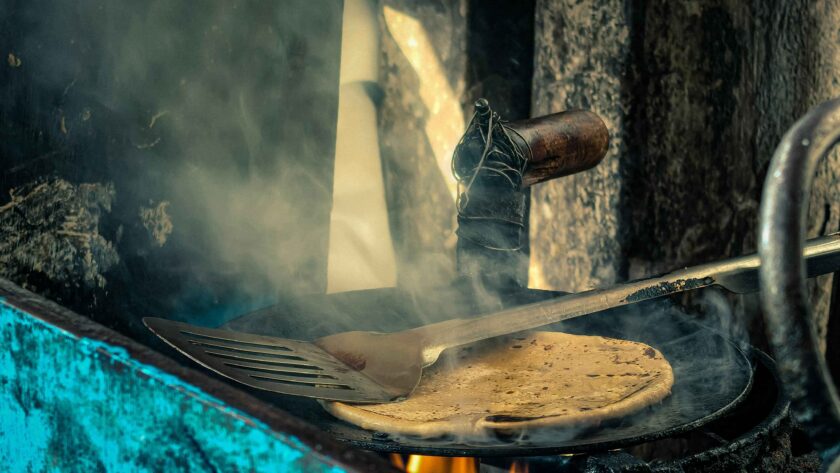
Heat a tawa (flat griddle) or heavy-bottomed pan over medium heat. Once hot, carefully lift the flattened roti and place it on the tawa. Cook for 1–2 minutes on one side until you see light brown spots forming.
Flip the roti and drizzle about ½ teaspoon of ghee or butter around the edges, gently pressing with a spatula to ensure even cooking. Repeat on the other side, adding another drizzle of ghee as desired. The roti should develop golden brown patches and a slightly crispy edge while staying soft inside.
Tip: Keep the flame medium to low to avoid burning, as maize flour cooks faster than wheat.
4: Serve and Enjoy
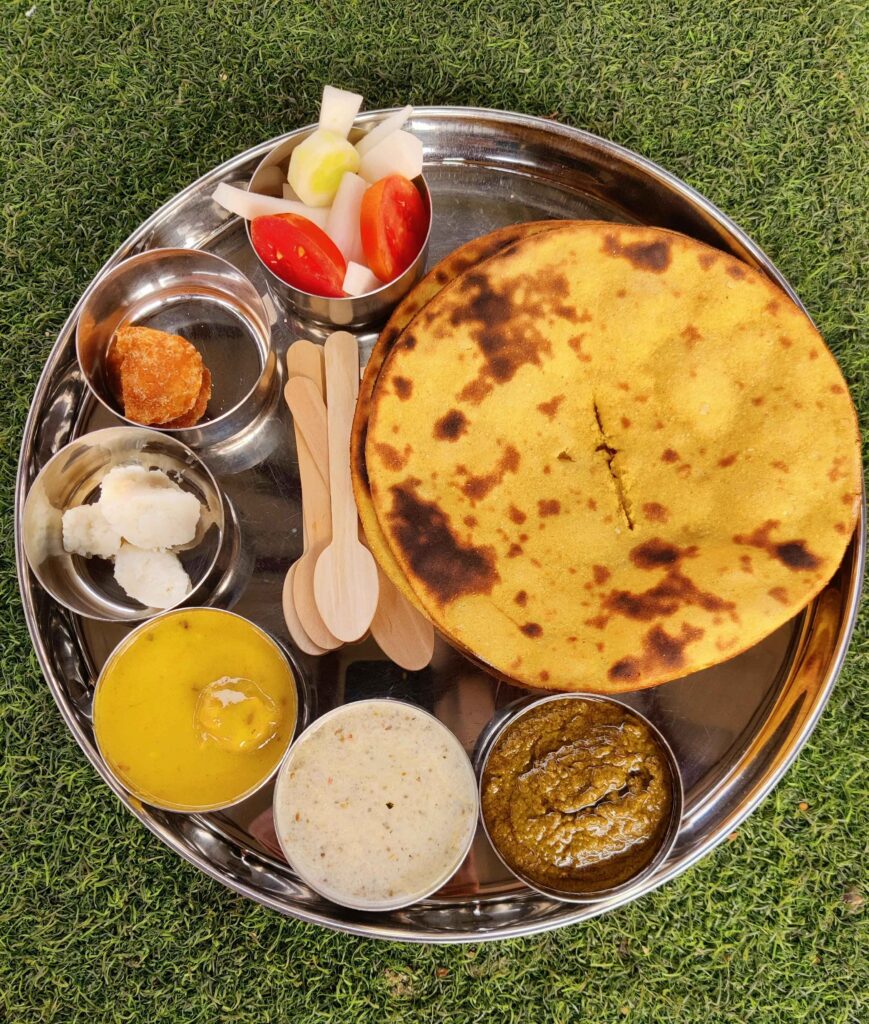
Stack the freshly made Makka ki Rotis in a covered basket or wrap them in a clean kitchen towel to keep warm. Serve them immediately, topped with a small dollop of butter or ghee. Traditionally, they are paired with Sarson ka Saag, but they’re equally delicious with spicy pickles, yogurt, or even jaggery for a sweet touch.
Tip: For a richer experience, brush each roti lightly with ghee right after cooking.
Calorie Breakdown (Estimated)
- Maize Flour (2 cups) – ~720 calories
- Ghee or Butter (3 tbsp) – ~360 calories
- Spices and herbs – ~10 calories
- Total Calories: ~1,090 calories
- Per Serving (serves 4): ~272 calories
Why This Recipe Works
Naturally Gluten-Free and Wholesome
Since Makka ki Roti is made purely with maize flour, it’s naturally gluten-free, making it a great option for those avoiding wheat or refined flours. Additionally, cornmeal provides dietary fiber and essential nutrients like magnesium and vitamin B.
Simple Ingredients, Big Flavor
Despite using minimal ingredients, the nutty flavor of maize flour combined with aromatic carom seeds creates a deeply satisfying taste. A touch of ghee enhances the richness, while optional herbs or chilies add a gentle punch.
Traditional and Comforting
There’s something incredibly nostalgic about Makka ki Roti. It evokes images of winter afternoons, cozy kitchens, and the comforting smell of flatbreads sizzling on a hot griddle. Preparing it at home lets you experience this timeless culinary tradition firsthand.
Versatile Pairing Options
Although Sarson ka Saag is the classic companion, Makka ki Roti pairs beautifully with a wide range of dishes — from lentil curries to dry vegetable sabzis. You can even serve it with butter, honey, or jaggery for a simple yet indulgent treat.
Quick and Straightforward
With a total preparation time under an hour, this recipe fits neatly into both busy schedules and leisurely weekend cooking. Plus, the hands-on kneading and shaping process can be a fun, meditative activity.
FAQs
Can I use wheat flour to make Makka ki Roti?
Traditionally, Makka ki Roti is made entirely with maize flour, but you can mix a little wheat flour if you’re struggling to bind the dough. However, this will change the texture and flavor slightly.
Why is the dough so crumbly?
Maize flour doesn’t contain gluten, which means it lacks the elasticity of wheat dough. Kneading with warm water and working gently is key. You can also add a tablespoon of oil to make it easier to handle.
How can I make the roti edges smoother?
Press the dough between plastic sheets or use damp fingers to patch cracks as you flatten the roti. Working slowly and carefully will yield smoother edges.
Can I make Makka ki Roti ahead of time?
While it’s best enjoyed fresh, you can prepare the dough in advance and store it in the fridge for up to 24 hours. Let it come to room temperature before rolling out.
How do I reheat leftover Makka ki Roti?
Reheat on a tawa over low heat, brushing with a little ghee to restore softness and flavor. You can also wrap them in foil and warm in the oven.
Is Makka ki Roti healthy?
Yes! Maize flour is rich in fiber and naturally gluten-free. When cooked with minimal ghee or butter, it makes for a wholesome and satisfying addition to any meal.
What can I serve alongside Makka ki Roti besides Sarson ka Saag?
Try pairing it with spicy potato curry, mixed vegetable sabzi, dal, or even plain yogurt and pickles. For a sweet twist, serve it with jaggery or honey.
What Makes This Recipe Special?
A Taste of Rural Punjab
Makka ki Roti is more than just food — it’s an experience, transporting you straight to the rustic kitchens of North India. Each bite is a celebration of simple, hearty ingredients crafted with care.
Wholesome and Satisfying
With its earthy flavor and rich texture, Makka ki Roti fills you up without heaviness, making it perfect for cold winter meals.
Minimal Effort, Maximum Reward
Despite its traditional roots, this recipe is wonderfully straightforward. Even novice cooks can achieve authentic results with just a few ingredients and a bit of patience.
A Crowd Favorite
Whether you’re cooking for family or entertaining guests, Makka ki Roti is sure to impress. Its unique texture and flavor stand out, especially when paired with well-spiced curries or creamy lentils.