 ucalorie
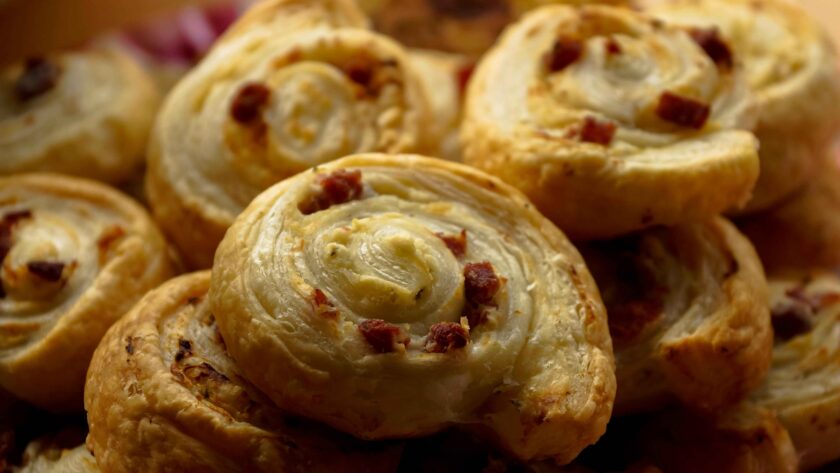
 If you’re longing for a golden, flaky, and buttery treat that transforms any ordinary day into a celebration, this Puff Pastry is your answer. With its countless crisp layers, delicate texture, and rich flavor, this classic pastry dough opens the door to both savory and sweet masterpieces—croissants, tarts, turnovers, and so much more.
Whether you’re planning to impress guests with elegant appetizers or indulge in a cozy weekend baking project, this puff pastry delivers unmatched versatility. Although store-bought puff pastry offers convenience, nothing compares to the homemade version that rises sky-high with love and care. It’s not just a recipe—it’s a baking experience that rewards your patience with every buttery bite.
Moreover, this puff pastry recipe stays true to traditional French technique while offering beginner-friendly guidance. It walks the perfect line between challenge and comfort, making the process rewarding and even meditative. The best part? With just four ingredients and some thoughtful folding, you’ll achieve bakery-quality results right at home.
Preparation Time for Puff Pastry
- Preparation Time: 45 minutes (active)
- Chilling and Resting Time: ~3 hours (in intervals)
- Total Time: ~3 hours 45 minutes
- Yield: ~2½ lbs (1.1 kg) of puff pastry dough (enough for 2–3 recipes)
Ingredients for Puff Pastry
For the Dough (Détrempe):
- All-Purpose Flour – 2½ cups / 312g (~1140 calories)
- Salt – 1 tsp
- Cold Water – ¾ cup / 180ml (~0 calories)
- Unsalted Butter (for dough) – 2 tbsp / 30g (~215 calories)
For the Butter Block (Beurrage):
- Unsalted Butter (for folding) – 1 cup / 226g (~1610 calories)
Total Estimated Calories: ~2965
Per 100g Dough: ~270 calories
Instructions: How to Make Classic Puff Pastry
1: Choose the Right Butter and Flour
For optimal results, start with high-quality ingredients. Use unsalted European-style butter if available—it has a higher fat content and lower moisture, which means richer flavor and better lamination. Similarly, choose unbleached all-purpose flour, which offers a balanced protein content ideal for structure without toughness.
Why it matters: Higher butterfat ensures better layering, and balanced flour prevents the dough from shrinking during baking.
2: Make the Dough (Détrempe)
Begin by creating a supple but not sticky dough base:
- In a large mixing bowl, whisk together the flour and salt.
- Add the 2 tablespoons of cold butter and rub it in using your fingertips until the mixture resembles coarse crumbs.
- Gradually pour in cold water, stirring with a spoon or your hands until a shaggy dough forms.
- Turn it onto a lightly floured surface and knead gently—just enough to bring it together.
Once smooth and cohesive, shape the dough into a square about 1 inch thick. Wrap it tightly in plastic wrap and chill for 30 minutes.
Tip: Avoid over-kneading, which can develop too much gluten and cause the pastry to spring back later.
3: Prepare the Butter Block (Beurrage)
Meanwhile, prepare the star of the show—your butter block:
- Place the cold butter between two sheets of parchment paper.
- Use a rolling pin to pound and shape it into a flat square, about 5 inches per side and ½ inch thick.
- Chill again if it becomes too soft, but aim for a pliable consistency that matches the dough’s firmness.
Why this step matters: The butter must be firm but flexible—not too cold and brittle, nor too soft and greasy.
4: Enclose the Butter
Now, it’s time to combine the dough and butter for lamination:
- On a floured surface, roll out the chilled dough into a 10-inch square.
- Place the butter block diagonally in the center like a diamond.
- Fold the corners of the dough over the butter, sealing the edges so no butter is exposed.
Lightly press to flatten, then roll gently into a rectangle about 8×20 inches. You’re now ready to start the folds.
5: First Fold (Turn 1)
This step starts the lamination process—alternating rolling and folding to build flaky layers.
- Fold the top third of the rectangle down, then fold the bottom third up over it—like a letter.
- Rotate the dough 90 degrees so the fold faces left (like a book spine).
- Gently press down, wrap in plastic, and refrigerate for 30 minutes.
Reminder: This is your first “turn.” You’ll need to complete six turns in total.
6: Repeat the Turns
Over the next couple of hours, repeat the same process:
- Roll the dough into a long rectangle (again, ~8×20 inches).
- Fold into thirds.
- Rotate, chill, and repeat.
Total: Perform 6 turns, chilling the dough 30 minutes between each turn.
Optional: If time permits, let the dough chill overnight before using it—it enhances the dough’s flavor and structure.
7: Final Chill and Usage
Once all six turns are complete:
- Divide the dough into two or three equal parts.
- Wrap each tightly and chill for at least 1 hour before rolling out.
- Use as desired in sweet or savory recipes: cheese twists, fruit tarts, mille-feuille, pot pies, and more.
Pro Tip: If you’re not using all the dough immediately, freeze the portions for up to 2 months. Thaw overnight in the fridge before use.
Serving Suggestions: Endless Possibilities
Puff pastry is truly a baker’s blank canvas. Here are some ideas to get you inspired:
Savory:
- Cheese Straws – Brush with egg wash, sprinkle parmesan, and twist.
- Palmiers – Add pesto or tapenade for a flaky appetizer.
- Mini Quiches – Line muffin tins with pastry and fill with egg mixture.
- Pot Pie Topping – Replace biscuit or pie crusts with puff pastry squares.
- Vegetable Tart – Layer with caramelized onions, goat cheese, and roasted veggies.
Sweet:
- Apple Turnovers – Fold in a spiced apple filling and glaze with icing.
- Napoleons (Mille-feuille) – Layer with pastry cream and top with fondant.
- Fruit Galette – Fold around seasonal fruits with sugar and cinnamon.
- Chocolate Puffs – Fill with dark chocolate squares and dust with powdered sugar.
- Cream Horns – Wrap around molds, bake, and fill with whipped cream.
Leftover Love: Smart Storage
Wondering how to store and reuse puff pastry?
- Unbaked Dough: Keep wrapped in the fridge for 2–3 days or freeze for longer.
- Baked Pastry: Store at room temperature for 1–2 days. To refresh, reheat at 350°F for 5 minutes.
- Scraps: Don’t re-roll into one ball. Instead, layer and press together to maintain some flakiness.
Calorie Breakdown (Estimated)
- All-Purpose Flour (312g): ~1140 calories
- Unsalted Butter (256g total): ~1825 calories
- Total Dough (1.1kg): ~2965 calories
- Per 100g: ~270 calories
- Per standard serving (1/8 batch): ~370 calories
Why This Recipe Works
1. Foolproof Laminated Layers
With clear steps and chill times, this recipe demystifies lamination—creating hundreds of crisp, buttery layers that puff dramatically in the oven.
2. Pure and Minimal Ingredients
Just flour, water, salt, and butter—yet the result is rich, complex, and luxurious. Simplicity at its finest.
3. Versatility at Its Best
Puff pastry adapts to virtually any filling or form—sweet, savory, bite-sized, or centerpiece-worthy.
4. Make-Ahead Friendly
Once made, this dough stores beautifully. Bake it fresh when needed, whether for breakfast, brunch, or dessert.
5. Budget-Smart Luxury
Though puff pastry feels gourmet, homemade versions cost far less than bakery-bought—and taste even better.
FAQs
Can I use salted butter instead?
Yes, but reduce the added salt by half. Keep in mind that salted butter has variable salt content, which may slightly affect flavor.
What if the butter breaks through the dough?
Don’t panic! Dust the area with flour and patch gently with dough. Chill immediately before continuing folds.
Can I make rough puff instead?
Certainly! While not as lofty, rough puff is quicker. Simply mix cold diced butter into the flour and fold 4–5 times with rest periods.
Why didn’t my pastry puff up?
This could be due to under-chilling, over-rolling, or warm butter leaking out. Always chill thoroughly between folds and handle gently.
Is puff pastry the same as phyllo dough?
Not quite. Puff pastry contains butter between layers of dough, while phyllo is paper-thin sheets brushed with oil or butter. They’re not interchangeable.
Can I add flavor to the dough?
Yes! Incorporate herbs, spices, or cheese into the dough for creative twists—just be sure they don’t disrupt lamination.
What Makes This Recipe Special?
A Flaky Labor of Love
Making puff pastry from scratch may take time, but the reward is spectacular. Every bite tells a story of patience, precision, and pastry magic.
Your Canvas for Creativity
From golden galettes to gooey cheese wheels, this pastry adapts to your imagination—whatever your mood or meal.
Layers of Joy, Literally
With over 700 layers created by simple folds, puff pastry turns four humble ingredients into a show-stopping staple.