
 ucalorie
 Heart disease remains one of the leading causes of death worldwide. Although genetics do play a role, lifestyle is a powerful factor in preventing heart attacks. Fortunately, the risk of a heart attack can be significantly reduced by incorporating a few healthy habits into your daily routine.
In this blog, we’ll explore five simple yet powerful habits that can help protect your heart, backed by science and recommended by cardiologists. From what you eat to how you move, each habit can make a noticeable difference over time.
1. Eat a Heart-Healthy Diet
Your diet plays a crucial role in determining your heart health. A balanced and nutritious eating plan helps manage blood pressure, reduce cholesterol, and control weight—all major contributors to heart attacks.
Why It Works:
Foods rich in fiber, healthy fats, antioxidants, and essential vitamins can reduce inflammation and protect blood vessels. On the other hand, processed foods, trans fats, and excess sodium can damage the heart over time.
Best Foods for the Heart:
- Leafy greens like spinach, kale, and collards are packed with nitrates and antioxidants.
- Berries such as blueberries and strawberries contain anthocyanins, which reduce oxidative stress.
- Nuts and seeds provide healthy fats, magnesium, and plant sterols.
- Whole grains improve cholesterol levels and reduce the risk of coronary artery disease.
- Fatty fish like salmon and sardines are rich in omega-3 fatty acids.
Foods to Limit:
- Red and processed meats
- Sugary beverages
- White bread and refined carbs
- High-sodium canned or fast foods
Actionable Tips:
- Add at least one fruit or vegetable to every meal.
- Cook with olive oil instead of butter or margarine.
- Replace white rice with brown rice or quinoa.
- Opt for grilled fish over fried chicken.
Transitional Words Used:
In addition, consequently, moreover, therefore, similarly
2. Exercise Regularly
Staying active is not just about weight loss; it’s about strengthening your heart. Regular physical activity helps maintain a healthy blood pressure, improves cholesterol levels, and boosts circulation.
Why It Works:
The heart is a muscle. Like any other muscle, it becomes stronger and more efficient when exercised. Cardio workouts, in particular, help lower resting heart rate and enhance the heart’s capacity to pump blood.
Best Exercises for Heart Health:
- Brisk walking (30 minutes/day)
- Jogging or running
- Cycling
- Swimming
- Dancing or aerobic classes
How Much Is Enough?
According to the American Heart Association, adults should aim for at least:
- 150 minutes of moderate aerobic exercise, or
- 75 minutes of vigorous activity per week
Actionable Tips:
- Take the stairs instead of the elevator.
- Walk your dog twice a day.
- Set an hourly reminder to stretch or walk.
- Join a local fitness or dance group.
Transitional Words Used:
Furthermore, for example, in contrast, thus, additionally
3. Manage Stress Effectively
Chronic stress contributes to heart disease more than people realize. When you’re stressed, your body produces hormones like cortisol and adrenaline that raise blood pressure and increase inflammation.
Why It Works:
By managing stress, you reduce the strain on your heart. Moreover, calmness helps in maintaining healthy habits like eating better and sleeping well, both of which benefit your heart.
Signs of Stress That Harm Your Heart:
- Sleeplessness
- Irritability
- Overeating or skipping meals
- Smoking or increased alcohol use
Effective Stress-Relieving Techniques:
- Mindful meditation for 10 minutes daily
- Deep breathing exercises like box breathing
- Journaling your thoughts
- Spending time in nature
- Talking to a therapist or trusted friend
Actionable Tips:
- Practice gratitude each morning.
- Limit social media and news intake.
- Create a stress-free bedtime routine.
- Listen to calming music or nature sounds.
Transitional Words Used:
Hence, on the other hand, indeed, as a result, nevertheless

4. Get Quality Sleep Every Night
Sleep is not a luxury—it’s a necessity for your heart. Inadequate or poor-quality sleep raises the risk of high blood pressure, diabetes, obesity, and heart attack.
Why It Works:
During deep sleep, your body repairs blood vessels and regulates hormones related to stress and appetite. Disrupted sleep can throw these systems off balance, putting your heart at risk.
Recommended Sleep Duration:
Adults need between 7 to 9 hours of quality sleep every night. Less than 6 hours consistently increases heart attack risk.
Common Sleep Disruptors:
- Screen time before bed
- Caffeine after 3 PM
- Stress and anxiety
- Sleep apnea or snoring
Sleep-Improving Habits:
- Stick to a consistent bedtime—even on weekends.
- Keep your bedroom dark, cool, and quiet.
- Avoid heavy meals late in the evening.
- Try herbal teas like chamomile before sleep.
- Limit alcohol intake at night.
Transitional Words Used:
Consequently, in summary, meanwhile, likewise, above all
5. Quit Smoking and Limit Alcohol
Tobacco and alcohol are both linked to heart disease in different ways. Smoking damages blood vessels, while excessive alcohol raises blood pressure and triglyceride levels.
Why It Works:
When you quit smoking, your heart health improves almost immediately. Within 24 hours, your heart rate drops, and within a year, the risk of coronary artery disease is halved. Moderating alcohol can also prevent fatty liver, high blood pressure, and irregular heartbeats.
Smoking Effects on the Heart:
- Reduces oxygen in blood
- Increases plaque buildup
- Causes inflammation in arteries
- Leads to blood clots
Alcohol: How Much Is Too Much?
- Men: Up to 2 drinks per day
- Women: Up to 1 drink per day
Actionable Tips:
- Use nicotine patches or consult a doctor.
- Join a support group to quit smoking.
- Opt for mocktails or sparkling water over alcohol.
- Keep alcohol out of your home to avoid temptation.
Transitional Words Used:
For instance, after all, otherwise, as such, in conclusion
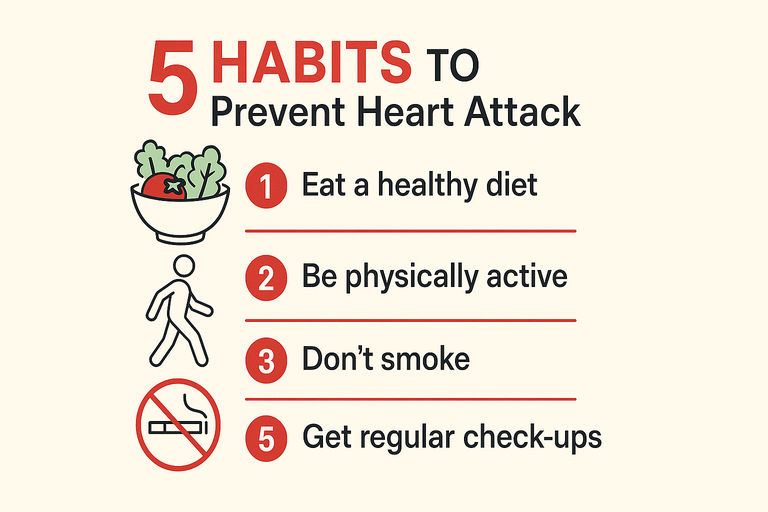
The visual guide sums up the five essential habits to prevent heart attacks—simple steps that, when practiced consistently, can protect your heart and extend your life.
Final Thoughs
Preventing a heart attack is not about doing one big thing—it’s about consistently making small, smart choices every day. By embracing these Habits for a Healthy Heart, you’re not just preventing heart attacks—you’re choosing a life of strength, vitality, and long-term wellness